Organ Restoration Updates
This page is dedicated to ongoing updates related to the Organ Restoration project. If you are interested in learning more about the campaign or make a contribution, please visit the Organ Fund Campaign page, or use the button below to contribute. Thank you!
Select “Organ Fund” from the dropdown menu.
Fall 2026
Over the last few months, the entire swell and choir divisions of the organ underwent a mechanical restoration. The pedal pipes and mechanism that are next to the swell and choir divisions were restored as well. This process included replacing all the failing leather components which prevented many pipes from playing.
Roughly 1,500 leather pouches were replaced along with other perishable materials inside the chests, such as the leather gaskets. All components were removed from the organ, cleaned, and refinished. The largest pipes of the swell, choir, and pedal divisions were removed from the organ and cleaned. You may have seen them in the choir room! This restoration work will ensure our magnificent Aeolian-Skinner organ plays reliably for many more years.
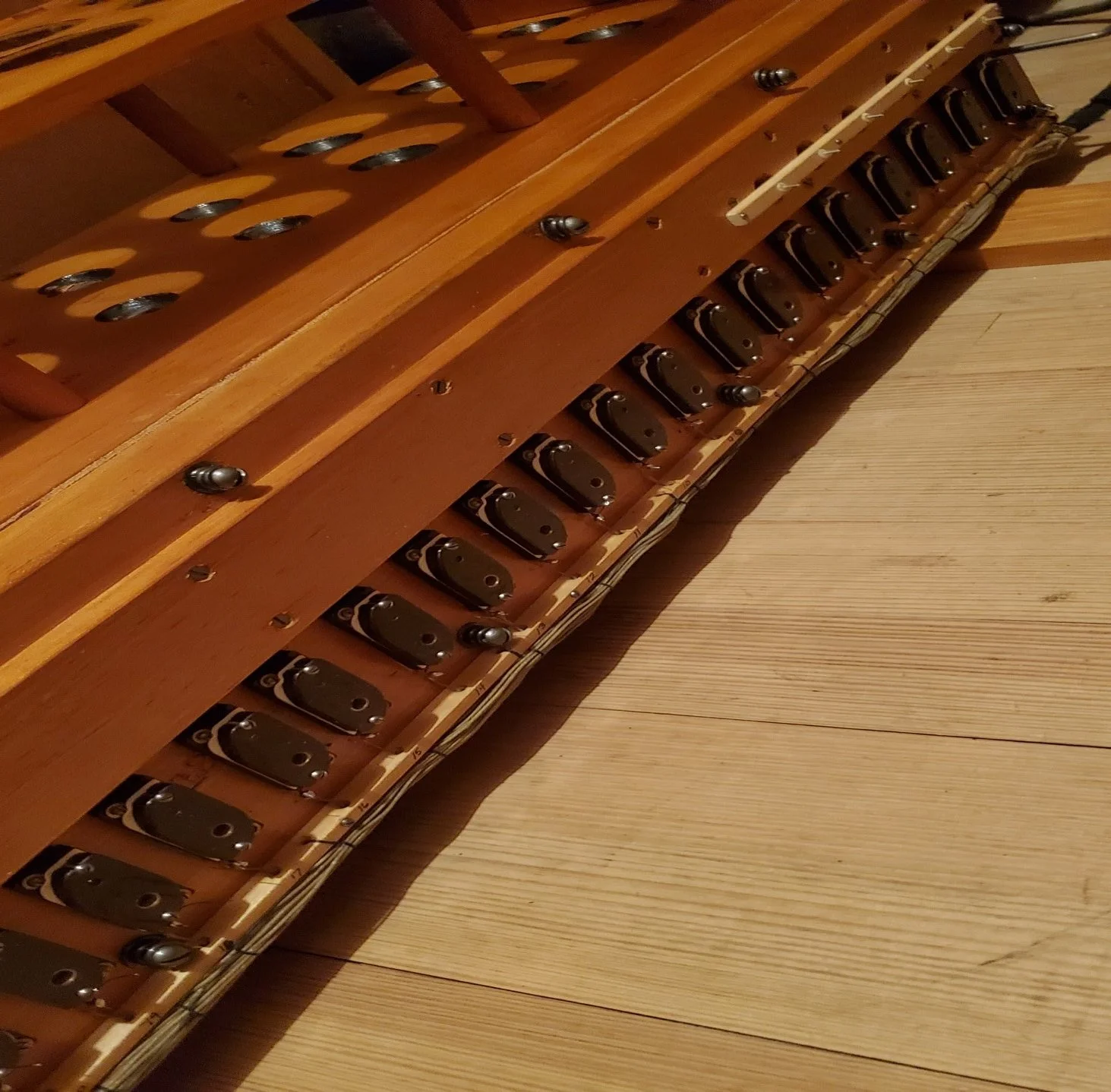
Restored Pedal Mechanism
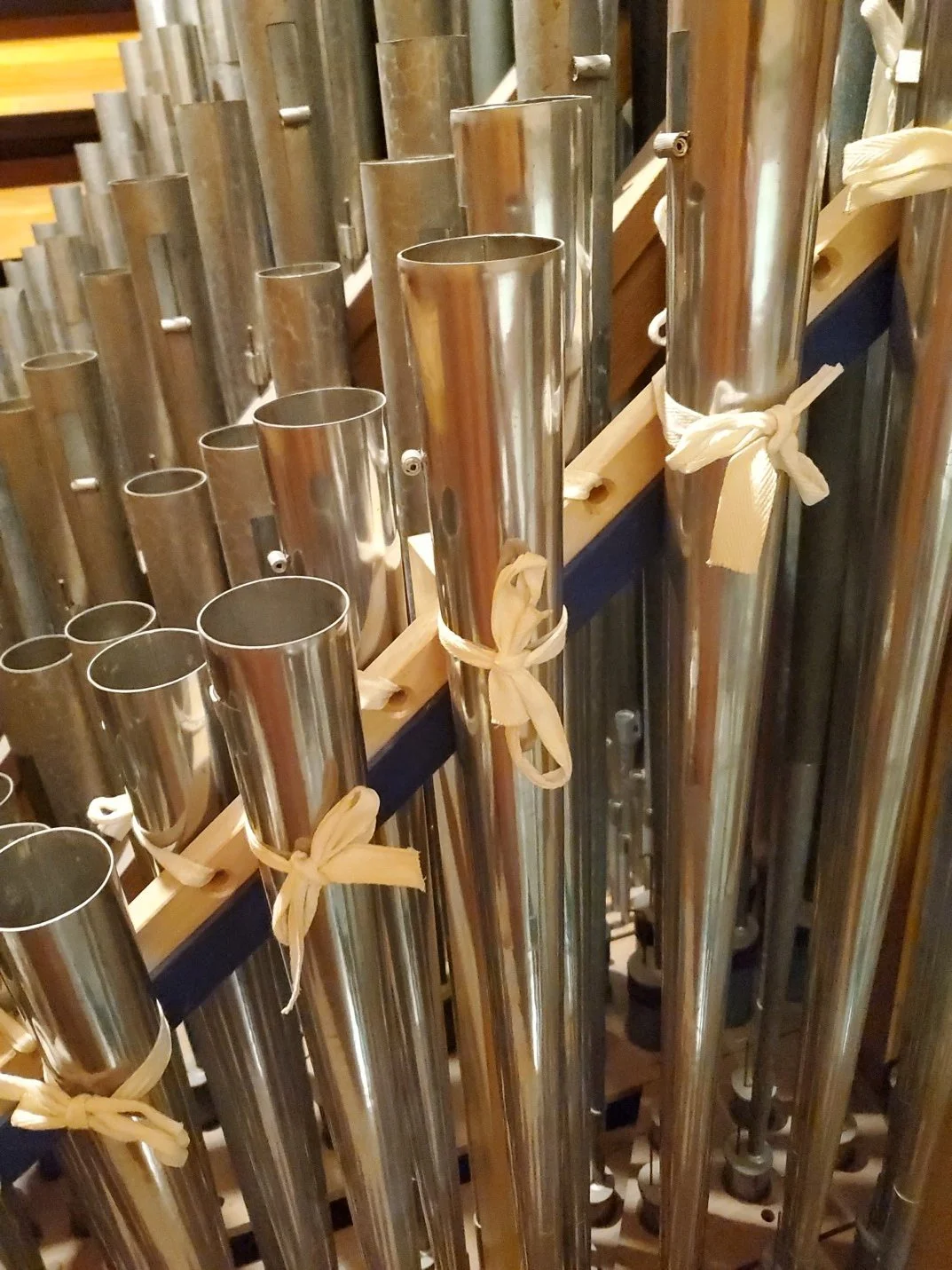
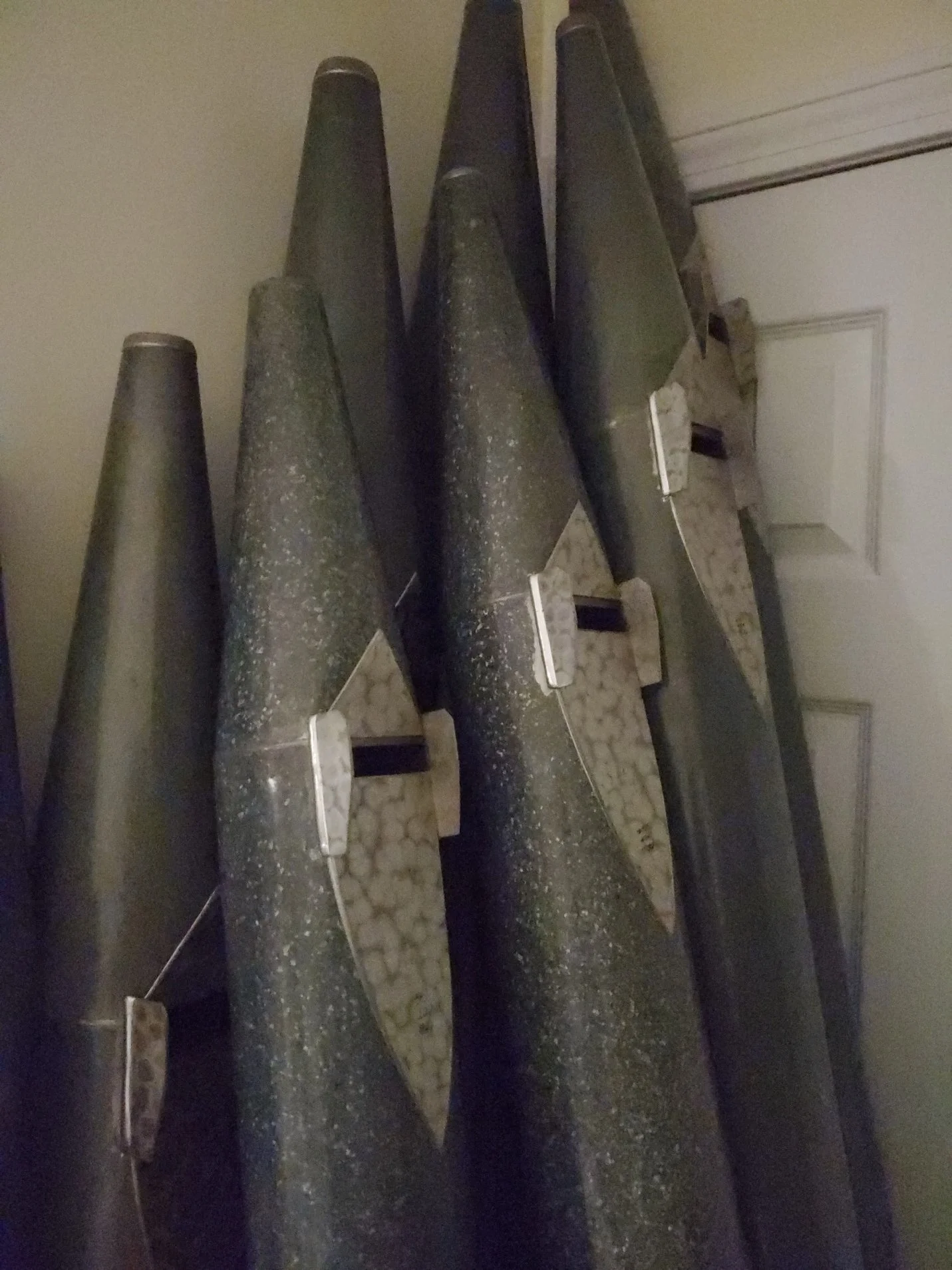
Pedal Pipes before and after cleaning
Spring 2026
Spring 2026 Update: We are excited to announce the start of Phase II of the organ restoration.
Phase II restores the swell and choir divisions located on the pulpit side of the organ. After almost 70 years of use, the leather valves under the pipes are drying out and cracking rendering them useless and leaving many pipes unplayable. This restoration phase will remove and replace these leather components as well as clean and recondition the wooden chests to which these valves are attached. This is a very labor-intensive job and is done entirely by hand. This phase will return these divisions to like-new condition, allowing our magnificent Aeolian-Skinner organ to play reliably for the next several decades.
The cost of this second phase of the restoration will total approximately $86,000 and should be completed by July. Most of the work will be done at the Spencer Organ Company workshop in Waltham. During this restoration you will see the organ being dismantled and reassembled. Although the swell and choir divisions will not be playable during the restoration, we will still have the great and pedal divisions (located on the lectern side) fully functioning so there will be organ music for our services during the renovation process.

Toeboard
One of the many toeboards that support the pipes and allow wind to blow through them. This particular toeboard holds one rank of pipes on the swell division, the 8' Viola Pomposa. 8' indicates that the lowest pipe of the Viola Pomposa rank is 8 feet tall. #1332 is the opus number of the organ, Swell #2 indicates the Viola Pomposa is the second rank in the swell (there are 12 ranks), and 3" press indicates the pipes are voiced to play under 3 inches of wind pressure. The inscriptions on this toeboard were done at the Aeolian-Skinner organ factory in Boston while the organ was under construction, 1957-1958. All components of the organ were inscribed for reassembly at St. Peter's.
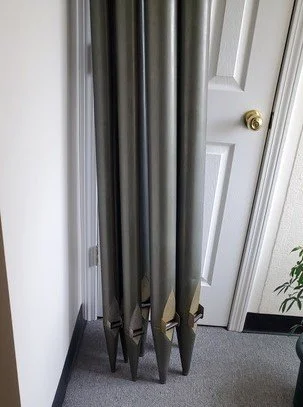
Viola Pomposa
These six pipes of the Viola Pomposa are the longest of the sixty-one pipes that make up this rank. They are being stored in the choir room until the restored swell division is ready to be reassembled.


Pouch Rails
The newly releathered pouch rails of the swell division. These pouches and valves are located directly under each pipe in the organ, causing the pipe to sound or be silent. The original leather was removed and the wood sanded and refinished.
The leather is sheepskin, cut from a large sheet. The process of cutting the leather and placing it on the rails is done entirely by hand at the organ workshop, the Spencer Organ Company in Waltham.